
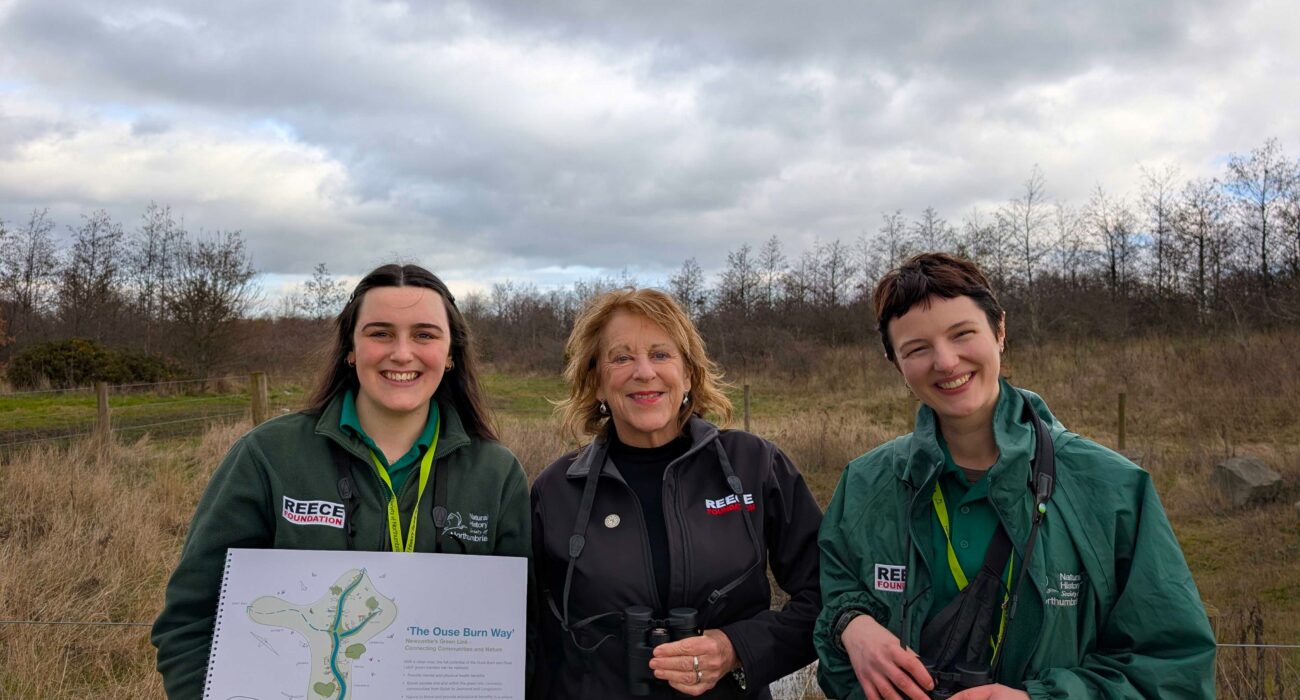
New Ecologist to Boost Wildlife Along the Ouse Burn Way
4th March 2026
A major boost for nature in Newcastle has begun this month, with the Natural History Society of Northumbria appointing Emily Anderson as the first dedicated Ouse Burn Ecologist for the city’s Ouse Burn corridor, to improve wildlife habitats and engage local communities along the length of the Ouse Burn Way.
The new role, funded by the Reece Foundation as part of its vision for the Ouse Burn Way, marks a significant expansion of the Wildlife Ways – a three‑year community-led environmental project to boost wildlife, improve local green spaces, and empower communities to take action for nature along the Ouse Burn.
Emily will lead a coordinated programme of wildlife recording, habitat improvements and community‑driven conservation activity – work expected to strengthen biodiversity across one of Newcastle’s most well‑used green corridors.
Anne Reece, Chair of the Reece Foundation and Ouse Burn Way project board, said:
“The Ouse Burn area is a truly special part of our local landscape, and we’re proud to be supporting its future through funding a dedicated Ouse Burn Ecologist. This vital role will help engage local communities, safeguard wildlife and ensure nature can flourish along this important corridor.”
The Ouse Burn has seen growing environmental pressures in recent years, from increasing recreational use to habitat loss. Emily’s appointment responds to these challenges, bringing new capacity and expertise at a time when nature recovery is a national priority.
Over the next few months, Emily will meet community groups, volunteers and residents to identify priority sites, develop new wildlife initiatives, and support local people eager to play a part in improving the Burn.
Emily joins the role following 18 months working with NHSN across Gosforth Nature Reserve and the wider region, where she has developed a reputation for hands‑on conservation and community engagement.
Emily Anderson, Ouse Burn Ecologist said:
“Connecting people with nature is what I love most. I can’t wait to bring that energy to the Ouse Burn Way and spark curiosity and confidence in local communities. Whether it’s searching for minibeasts with children, dissecting owl pellets with adults, getting muddy planting wildflowers and trees, or simply watching and recording wildlife, I really believe that getting stuck in is the best way for people to fall in love with nature and want to look after it.”
Alongside research and habitat work, Emily will lead a programme of public activities – from wildlife surveys and family discovery sessions to practical conservation days – designed to help people connect with and care for nature on their doorstep.
Residents, businesses and community groups along the Ouse Burn who want to support local wildlife or share their ideas for improving the valley are encouraged to get in touch.
The Ouse Burn Way is a seven-mile urban wildlife corridor from the mouth of the Ouseburn to Weetslade Country Park. Its vision goes beyond wildlife, improving water quality, enhancing wellbeing, and creating spaces for communities to connect with nature. The Reece Foundation’s £1 million Ouse Burn Way fund supports local projects that make this vision a reality.
Back to News